
Color Quest: Building Cognitive Bridges with a Rainbow Hunt
Engaging children with a color-themed scavenger hunt offers a subtle yet powerful opportunity to nurture critical thinking and observational skills, laying foundations for future learning success.
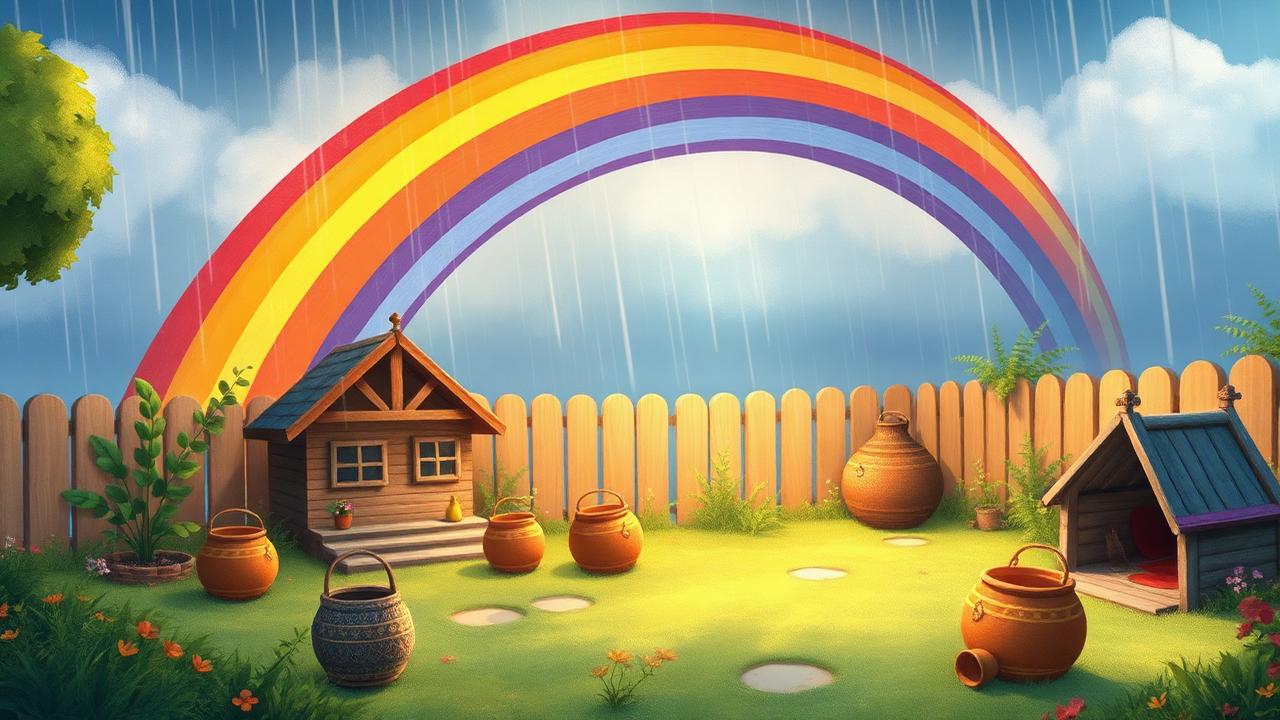
Unlocking the Rainbow's Hidden Spectrum of Skills
At its heart, a rainbow-themed hunt is an exercise in visual discrimination and categorization. Children are tasked with identifying specific colors in varied contexts, distinguishing subtle shades, and grouping similar items. This process goes beyond simple color naming; it trains the brain to recognize patterns and make nuanced comparisons, which are vital precursors to literacy and numeracy skills. When they search for 'something red and soft' or 'something blue and smooth,' they're integrating multiple sensory inputs and descriptors.
Furthermore, the sequential nature of following clues in a color progression (like the ROYGBIV of a rainbow) introduces rudimentary sequencing and deductive reasoning. Children learn that finding one color leads them to the next, building a predictive framework for problem-solving. This isn't just about finding objects; it's about understanding that each discovery contributes to a larger pattern, a cornerstone of scientific inquiry.
Tailoring Growth: Developmental Engagement Across Ages
For children aged 4-5, the primary benefit lies in solidifying color recognition and expanding vocabulary. They engage with the hunt on a concrete level, matching colors and practicing naming them aloud. The physical act of searching for the specific hue also enhances gross motor skills and spatial awareness as they navigate their environment with a purpose.
As children transition to ages 6-7, the hunt naturally encourages more complex cognitive processes. They begin to internalize the color sequence (ROYGBIV), practicing memory recall and applying simple logic to figure out 'what comes next.' This age group also benefits from the reading of simple clues, connecting written words to visual cues, thereby strengthening emergent reading skills and comprehension.
Children aged 8-10 can leverage this activity for more sophisticated challenges. Introducing clues that require blending primary colors to find a secondary one, or searching for items that exhibit specific color properties (like 'iridescent' or 'translucent'), elevates the hunt into an exploration of basic optics and descriptive language. They can also take on the role of clue writers, further cementing their understanding of the hunt's structure and the properties of color.
Three Real-World Skills Parents Will Observe
Parents will clearly see their children honing their observational acuity. A child, initially looking for 'red,' will soon be distinguishing between a bright red flower, a faded red toy, and the reddish hue on a brick wall. This meticulous scanning and comparing of visual data is a critical skill for everything from reading maps to noticing details in scientific diagrams.
Another observable skill is the development of sustained attention and persistence. Unlike passive entertainment, a scavenger hunt requires continuous focus to interpret clues, search environments, and move through the sequence. Parents will see children problem-solving independently, encountering a challenge (like a difficult clue), and persevering until they find the answer, rather than giving up quickly.
Finally, this activity implicitly supports early classification and categorization abilities. As children gather items of a certain color, they are actively engaging in sorting and attribute matching. This underpins mathematical understanding (like sorting by shape or size) and scientific principles (like grouping organisms by characteristics). Observing them sort their collected treasures reveals this developing cognitive structure.
Extending Discovery Beyond the Search
The learning doesn't have to end when the last color is found. Encourage children to sort their collected items by additional properties like texture (smooth, bumpy), size (big, small), or even origin (natural, man-made). This deepens their understanding of categorization and encourages richer descriptive language. A conversation about 'why' a certain item was chosen for a color category also strengthens their reasoning skills.
Another powerful extension is to involve children in creating their own color-themed clues for a family member. This task requires them to think critically about objects, their attributes, and how to communicate location effectively. Writing simple riddles or drawing visual clues for the next player reinforces literacy and spatial awareness, making them active participants in the learning design.
When This Vibrant Quest Might Not Fit
While highly adaptable, this hunt might not be the best fit for environments with extremely limited color variety, such as a very monochromatic room or a sparse, undeveloped patch of land with few distinct objects. The essence of the hunt relies on finding varied examples of each color, so a rich visual landscape is beneficial.
Additionally, for children who find unstructured, open-ended play more engaging than goal-oriented tasks, the sequential nature of a scavenger hunt might feel too constrained. It's designed to guide discovery, which might not align with every child's preferential play style at a given moment.
Frequently asked questions
Is a color-focused hunt truly beneficial for development, or is it just another game?+
This hunt is designed to be deeply beneficial. It fosters visual discrimination, early logical reasoning, sustained attention, and descriptive language skills — all crucial cognitive building blocks disguised as engaging play.
My child is an advanced reader for their age; will the clues in this rainbow hunt still be engaging?+
Absolutely. For advanced readers, the challenge shifts from decoding words to applying deductive reasoning and linking descriptive attributes to the world around them. You can also introduce more complex color concepts or multi-attribute clues to increase the cognitive load.
My child is sometimes a reluctant reader. Will they get frustrated trying to follow the color clues?+
This hunt is highly adaptable. For reluctant readers, focus on visual clues, color swatches, or have an adult read the clues aloud, emphasizing keywords. The joy of discovery often motivates even hesitant readers to engage with the written word more readily.
Does engaging in screen-free play, like finding colors, genuinely help with a child's focus and attention span?+
Yes, screen-free, goal-oriented activities like scavenger hunts are excellent for developing sustained attention. They require children to observe their environment, interpret information, and plan their next steps without the rapid, external stimulation of screens, thereby strengthening internal focus mechanisms.
Could this color spectrum hunt be integrated into a homeschool curriculum?+
This hunt integrates seamlessly into a homeschool curriculum, particularly for science (light, optics, nature study), art (color theory, observation), and language arts (descriptive vocabulary, following instructions, writing clues). It provides a hands-on, experiential learning module.
More adventures like Color Quest: Building Cognitive Bridges with a Rainbow Hunt
Explore more backyard scavenger hunt ideas
Hand-picked themed quests and seasonal adventures families love most.
Build your own Color Quest: Building Cognitive Bridges with a Rainbow Hunt
Generate a fully personalized version of Color Quest: Building Cognitive Bridges with a Rainbow Hunt — woven around your child's name, age, favorite characters and special touches, all inside this exact storyline.
Create This Custom Hunt →