
Earth's Backyard Champions: Fostering Environmental Stewardship
Engage young minds with a scavenger hunt designed to subtly build ecological awareness and critical thinking. This activity promotes active outdoor exploration, connecting children with the natural world around them through guided discovery.
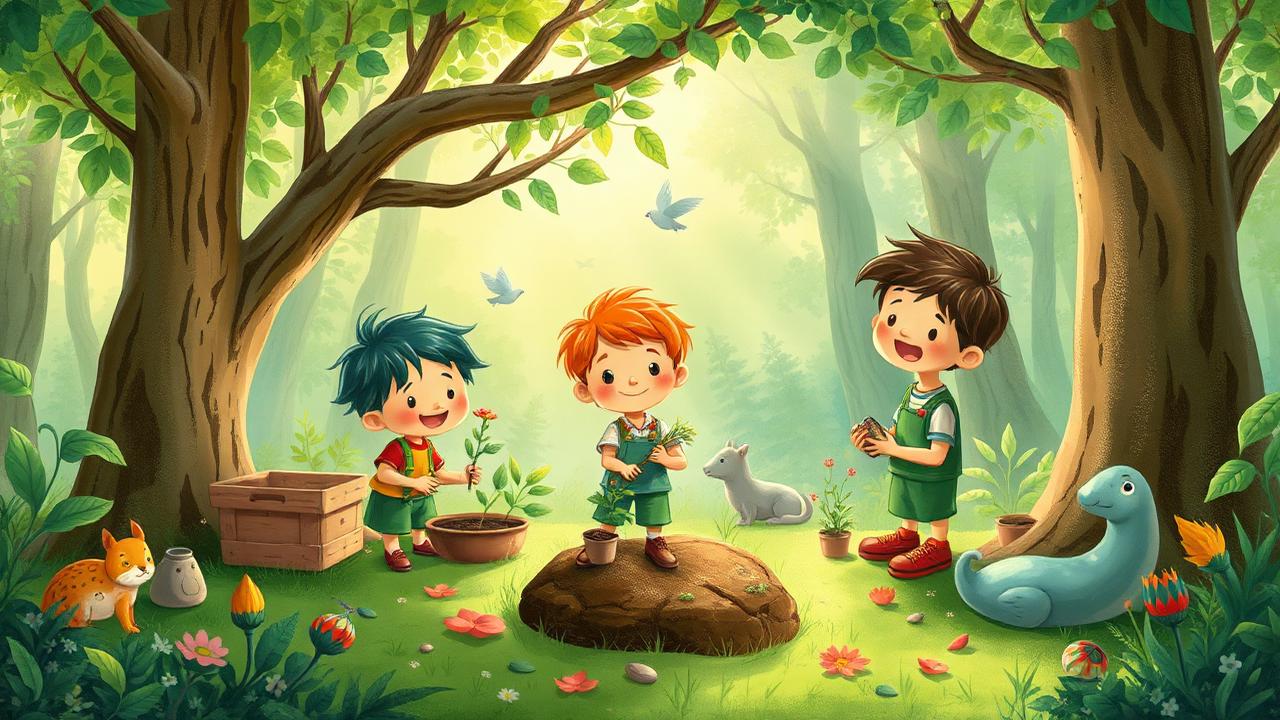
Unearthing Ecological Understanding Through Play
This scavenger hunt is ingeniously structured to introduce foundational concepts of environmental care without ever explicitly feeling like a lesson. As children search for clues, they are naturally engaging with elements of their local environment—inspecting leaves for insect activity, identifying different types of soil, or distinguishing between natural and man-made objects. This direct interaction sparks curiosity and prompts questions, laying groundwork for future scientific inquiry. The very act of finding and categorizing these items builds early classification skills, a cornerstone of scientific thought.
Beyond simple identification, the hunt's design encourages an understanding of interconnectedness. A clue might lead them to a pollinator, prompting a discussion about its role, or to a piece of litter, initiating a conversation about human impact. These subtle cues are not about memorizing facts but about fostering an intuitive grasp of ecological principles. It’s a gentle, hands-on approach to understanding the world as a system where every component plays a part, fostering empathy not just for nature, but for the impact of one's own actions.
Developmental Growth Across Age Bands
For children aged 4-5, the primary benefits lie in gross motor skill development and object permanence. Navigating the backyard, bending to pick up clues, and running between locations refines their physical coordination. The visual cues and simpler riddles within the hunt reinforce object recognition and the idea that something can be hidden but still exists, building early problem-solving capacity. Their delight in discovery is often palpable, laying a positive groundwork for future learning.
As children transition into the 6-7 age range, the hunt begins to tap into more sophisticated cognitive processes. They can decipher slightly more complex riddles, requiring a basic understanding of wordplay and context. Their observation skills become sharper, moving beyond just seeing an object to noticing its characteristics—its texture, color variations, or habitat. This age group also benefits from the sequential nature of the hunt, reinforcing concepts of ordering and following multi-step directions, which are crucial for academic readiness.
Children aged 8-10 gain significantly in deductive reasoning and environmental literacy. The clues for this age group can incorporate more abstract concepts, prompting them to infer solutions based on provided information. They are capable of understanding the 'why' behind certain environmental observations, such as why composting is beneficial or why certain plants attract specific insects. This hunt provides a tangible context for their burgeoning scientific understanding, allowing them to apply knowledge in a real-world, engaging scenario, reinforcing their sense of personal agency in caring for their surroundings.
Nurturing Tangible Skills Beyond the Game
Parents will notice their children actively practicing enhanced observation skills. Rather than simply glancing, children learn to *look*—to examine the underside of a leaf, to differentiate between similar-looking twigs, or to spot a subtle change in their environment. This heightened attention to detail translates into improved focus and an ability to pick up on nuances, valuable in everything from reading comprehension to artistic endeavors.
Another key skill fostered is problem-solving. Each clue presents a mini-challenge, requiring children to analyze information, consider possibilities, and test their hypotheses by searching specific areas. This iterative process of thinking, acting, and evaluating is fundamental to developing critical thinking, teaching them resilience when an initial attempt doesn't yield the desired result and encouraging them to try new approaches.
Finally, this hunt naturally encourages basic classification and categorisation. Whether it's sorting natural objects like rocks and leaves, or understanding the difference between living and non-living things in their garden, children are engaged in scientific grouping. This foundational skill supports their ability to organize information, identify patterns, and make sense of complex data, which are cornerstones of academic success in science, math, and beyond.
Extending the Eco-Journey After the Hunt
The learning doesn't have to end when the final clue is found. Encourage children to create a 'Nature Journal' where they can draw or describe the items they discovered during the hunt. This activity further refines their observation skills and provides a space for creative expression. You might prompt them to sketch a particularly interesting leaf or document the types of insects they encountered, fostering a deeper connection to their findings.
Consider expanding on specific discoveries. If a clue led to a discussion about pollinators, spend an afternoon planting bee-friendly flowers together. If litter was part of the experience, organize a small family clean-up in a local park. These extensions transform the hunt's concepts into actionable steps, reinforcing the idea that environmental stewardship is an ongoing process with tangible positive outcomes, making the learning deeply personal and impactful.
When Nature Calls Elsewhere: Identifying Mismatch Scenarios
This particular hunt might not be the best fit for very small urban environments with limited access to natural elements like trees, soil, or diverse plant life. The core design relies on engaging with natural objects and landscapes, so a concrete-heavy backyard or balcony might not offer enough variety to fully support the thematic elements. Similarly, if your child is particularly sensitive to outdoor elements like insects or dirt, significant adjustments might be needed to maintain their comfort and engagement.
Additionally, if the weather is consistently inclement, the outdoor focus of this hunt becomes a challenge. While some elements can be adapted indoors with potted plants or nature collections, the spirit of active, outdoor exploration and direct interaction with a natural ecosystem is diminished. The optimal experience truly flourishes in an outdoor setting where nature can be fully explored.
Frequently asked questions
Does this activity truly provide developmental benefits, or is it merely entertainment?+
This activity is thoughtfully designed to blend engaging play with significant developmental opportunities. Children are actively honing observation, problem-solving, and critical thinking skills, while also developing gross motor coordination and an early understanding of ecological concepts through direct interaction with their environment.
Will an older child, who is already reading proficiently, find this hunt engaging enough?+
Absolutely. For advanced readers, the clues can be made more intricate, incorporating deeper vocabulary or more abstract concepts that require deductive reasoning. The hunt's richness lies in its ability to adapt, allowing older children to explore complex environmental ideas and solve more challenging puzzles within the same framework.
What if my child struggles with reading; will they become frustrated during this activity?+
Not at all. The hunt's design is flexible. For reluctant readers, visual clues, pictograms, or even simple verbal prompts can be used in conjunction with or in place of text. The emphasis is on active participation and discovery, making it accessible and enjoyable regardless of reading proficiency, ensuring a positive experience rather than frustration.
Can screen-free outdoor play like this genuinely improve a child's focus and attention span?+
Yes, it can significantly contribute. Engaging in goal-oriented outdoor activities fosters sustained attention as children concentrate on clues, navigate their environment, and search for specific items. This structured yet unhurried focus in a natural setting offers a beneficial contrast to the rapid-fire stimulation of screens, helping to build attention stamina.
Is it possible to integrate this scavenger hunt into a homeschool curriculum?+
This hunt is an excellent complement to a homeschool curriculum, particularly for science or environmental studies. It provides a practical, hands-on application of concepts about ecosystems, plant life, and conservation that can be expanded upon with further reading, journaling, or project-based learning, making abstract ideas tangible and memorable.
More adventures like Earth's Backyard Champions: Fostering Environmental Stewardship
Explore more backyard scavenger hunt ideas
Hand-picked themed quests and seasonal adventures families love most.
Build your own Earth's Backyard Champions: Fostering Environmental Stewardship
Generate a fully personalized version of Earth's Backyard Champions: Fostering Environmental Stewardship — woven around your child's name, age, favorite characters and special touches, all inside this exact storyline.
Create This Custom Hunt →