
Jurassic Dig Site: A Fossil Discovery Expedition
Walk your new counselors through the Dinosaur Fossil Expedition. This plan outlines specific activities, timings, and strategies to run a smooth, engaging dig for your junior paleontologists.
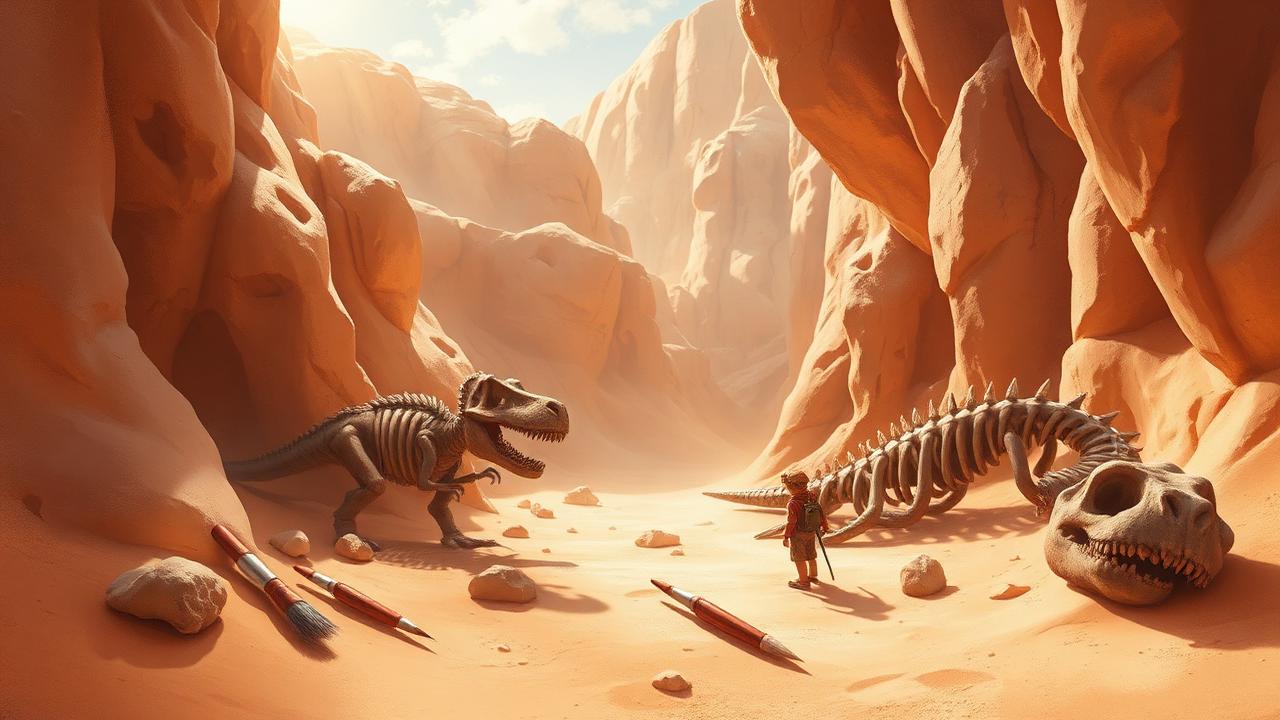
The Field Log: Your Expedition Blueprint
Here's the top-level breakdown. You'll introduce the mission, send them to the first dig site, guide them through finding bones and deciphering clues, lead them to the 'main fossil bed,' and then celebrate their big discovery. Plan for roughly 45-60 minutes total, depending on how quickly the kids move. Keep an eye on the clock, but don't rush them if they're engaged.
Your role is lead scientist. You're setting the scene, handing out critical tools, observing their technique, and making sure the expedition stays on course. They're the field team, doing the heavy lifting and making the discoveries. Use the supplied field guide pages to give them specific tasks at each location.
Initial Site Reconnaissance (Minute 0–5)
Right at the start, gather the team. Tell them you've received reports of ancient fossil traces in the area. Hand them each a 'Junior Paleontologist Kit' — a small brush, a magnifying glass, and their first field guide page. Explain that this page contains coordinates to their first discovery zone. Have them examine the page closely for a hint. Don't just give them the answer; let them work it out.
As they head to the first location, remind them to move carefully, like real scientists approaching a delicate dig site. Observe their initial reactions. Are they scanning the ground? Are they already guessing what they might find? This opener sets the tone for the entire hunt, so make it immersive. You're building anticipation for the big finds.
The Excavation Phase (Minute 5–40)
This is the core of the hunt. At each clue location, they'll perform a specific 'paleontological task' — maybe brushing away sand (dirt) from a hidden 'bone' (clue), or using their magnifying glass to 'identify mineral traces' (spot a small detail on a clue). Once they complete the task, they find the next clue. The field guide pages will direct them on what to do and what to look for, linking directly to the clue's mission.
Keep the pace moving. If they linger too long at one spot, gently guide them. 'Are you sure you've examined every rock, team leader?' or 'What does your field guide say about this particular strata?' They should find 4-5 clues in this phase, each leading to a new, slightly more challenging, but equally rewarding task. Ensure each 'discovery' feels significant.
Revealing the Major Find (Minute 40–50)
The final clue leads them to the 'Main Fossil Bed.' This should be a pre-dug sandbox or a designated area where you've buried several larger 'bones' or 'fossil fragments' (these can be painted rocks, plastic dinosaur parts, or even actual replica fossils). Give them a larger brush or small trowel. Tell them: 'This is it, team. Our seismic readings indicate a significant density of ancient remains right here. Begin a careful excavation.'
As they dig, encourage collaborative effort. Who found the skull? Who found a rib? As they unearth pieces, have them try to assemble them, if possible, or at least identify the type of dinosaur the parts might belong to. This acts as the grand reveal, the payoff for all their earlier efforts. Their collective finds culminate in the ultimate discovery.
Managing Expedition Challenges (Troubleshooting)
If a kid stalls, refusing to move or participate, don't push too hard. Reframe their role. 'We need your sharp eyes, lead explorer. Without you, this expedition can't succeed.' Or, 'Tell me what you think needs to happen next.' Sometimes a small, specific task helps them re-engage. If they finish too fast, have them 'document their findings' — draw what they saw, describe the habitat, or even 'research' other dinosaurs in your field guide.
For those racing ahead, designate them as 'Scout Leader' with a specific advanced task that might involve looking for additional, harder-to-spot 'trace fossils' near a discovered clue, while others catch up. This keeps them engaged without simply finding the next clue for everyone. Always have an extra 'challenge card' ready for individual adventurers who need more stimulation. Keep the atmosphere supportive and flexible.
Frequently asked questions
What's the shortest version of this fossil expedition I can run?+
For a quicker dig, use only three to four main clues, focusing on easily accessible locations. Skip the more complex 'excavation' tasks. The goal is to get to the main fossil bed faster, so trim down the preamble and some intermediary steps.
What's the longest version of this expedition that still holds their attention?+
To extend the adventure, incorporate 6-8 clues, each with a mini-task. Add steps like 'mapping the site' (tracing a simple map), or 'identifying plant fossils' (looking for specific leaves). Give them a 'field journal' to record findings at each station. A 60-75 minute run works well for this.
How do I pause this expedition and restart it later in the day?+
If you need to break, tell the team: 'We've hit a seismic anomaly! We need to pull back to base camp and regroup.' When restarting, recap their last find and remind them of the next objective. 'Our instruments are clear again; let's return to sector Gamma and continue our search for the Carcharodontosaurus jawbone!'
What if my junior paleontologists argue over who found the clue?+
Emphasize teamwork. 'Great observation, both of you saw it! In an expedition, every pair of eyes is crucial.' If a specific task is involved, you can assign different roles: 'One explores, one documents.' For the finale, ensure there are enough 'fossils' for everyone to make a personal discovery or contribute to a shared find.
More adventures like Jurassic Dig Site: A Fossil Discovery Expedition
Explore more backyard scavenger hunt ideas
Hand-picked themed quests and seasonal adventures families love most.
More dinosaur adventures
Build your own Jurassic Dig Site: A Fossil Discovery Expedition
Generate a fully personalized version of Jurassic Dig Site: A Fossil Discovery Expedition — woven around your child's name, age, favorite characters and special touches, all inside this exact storyline.
Create This Custom Hunt →